Table of Contents
- What Is Contract Lifting in Construction?
- Contract Lift vs Crane Hire: Key Differences
- Contract Lifting Responsibilities: Who Does What
- The Contract Lifting Plan: What It Must Include
- Contract Lift Insurance and Compliance Requirements
- When Your Project Needs a Contract Lift
- Selecting a Qualified Lifting Provider
- Frequently Asked Questions
Last Updated: October 21, 2026
What Is Contract Lifting in Construction?
Contract lifting construction is the fully managed provision of heavy lifting for construction and industrial projects.
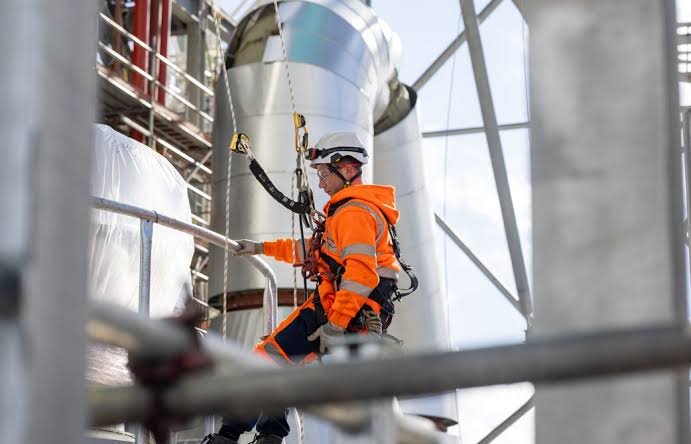
Unlike standard crane hire, where you book equipment and operate it yourself, contract lifting is turnkey: the provider takes responsibility for safety, planning, and execution, so your team focuses on its own work.
Contract lifting construction services handle difficult loads, oversized structural components, modular units, or equipment needing precise positioning, bringing expertise in load calculations, equipment selection, and site-specific planning.
The key difference is accountability. With contract lifting, the lifting provider carries the responsibility for the operation. Your appointed person oversees it, but the contractor’s team does the work and bears the liability.
Contract Lift vs Crane Hire: Key Differences
Crane hire means you rent equipment, a crane, rigging, or access platform, and operate it with your own team, handling planning, risk assessment, method statements, and execution.
Contract lifting is different. The contractor provides the equipment AND the team. They plan the lift, conduct the site survey, produce the lift plan, and execute the operation.
| Aspect | Crane Hire | Contract Lift |
|---|---|---|
| Equipment | You rent it | Contractor provides it |
| Planning | Your responsibility | Contractor’s responsibility |
| Execution | Your team operates | Contractor’s team operates |
| Risk assessment | You conduct it | Contractor conducts it |
| Insurance | You arrange it | Contractor arranges it |
| Cost model | Hourly/daily rate | Project-based quote |
For small, straightforward moves, crane hire makes sense.
A common mistake is treating contract lifting and crane hire as interchangeable. They’re not. If you book crane hire but need contract lifting support, you’re taking on responsibility you may not be equipped to handle. This creates compliance gaps and safety risk.
Contract Lifting Responsibilities: Who Does What
Health and safety law places duties on multiple parties; confusion about responsibility leads to accidents and enforcement action.
The client (your organisation) must:
- Provide accurate information about the load (weight, dimensions, centre of gravity)
- Ensure the site is suitable for the lift (ground conditions, access, overhead hazards)
- Appoint a competent Appointed Person to oversee the operation
- Ensure workers are trained and aware of the lift plan
The contract lifting contractor must:
- Conduct a thorough site survey
- Produce a detailed lift plan (method statement)
- Carry out a formal risk assessment (RAMS: Risk Assessment and Method Statement)
- Select appropriate equipment and rigging
The Appointed Person (usually your site manager or HSE representative) must:
- Understand the lift plan before work begins
- Ensure the site is clear and safe
- Stop the lift if conditions change or hazards emerge
- Communicate with the contractor’s team throughout
The contract lifting provider takes the operational lead. Your Appointed Person oversees on your behalf. Both roles are essential and must be clearly defined before work starts.
The Contract Lifting Plan: What It Must Include
A lift plan is not a checklist but a technical document demonstrating the lift is safe and feasible, and your evidence of due diligence if something goes wrong. Its value is in the sequence: how it is built, who signs it off, and what you challenge before the crane arrives.
The planning sequence
A competent contractor builds the plan in a defined order:
- Define the load. Weight, dimensions, centre of gravity, lift points, fragility, and special handling needs. If the weight is estimated rather than confirmed, that is a red flag, ask for the source (weighbridge ticket, manufacturer’s data, or calculation).
- Survey the site. Ground conditions and bearing capacity, underground services, overhead hazards including power lines, access routes, set-down positions, and weather exposure. The survey should be on-site, not desk-based.
- Select the equipment. Crane type and capacity, rigging configuration, spreader bars, slings, and shackles. Capacity must be checked against the actual radius and configuration, not the crane’s maximum rating.
- Draft the lift sequence. A step-by-step description of how the load moves from start to finish, including any multi-stage rigging or temporary support.
- Assess the risk. Identified hazards and control measures for each stage, captured in the Risk Assessment and Method Statement (RAMS).
- Set the limits and contingencies. Weather limits (wind speed, visibility), stop criteria, backup equipment, alternative methods, and emergency procedures.
- Approve and brief. The Appointed Person reviews and signs off; the team is briefed before work starts.
What the plan must contain
- Load details: weight, dimensions, centre of gravity, fragility, special handling needs
- Site survey findings: ground conditions, bearing capacity, overhead hazards, access routes, weather exposure
- Equipment specification: crane type and capacity, rigging configuration, spreader bars, slings, shackles
- Lift sequence: step-by-step description of how the load moves from start to finish
How the plan ties to BS 7121 and the Appointed Person
BS 7121, the British Standard for the safe use of cranes, expects lifts to be planned, supervised, and carried out by competent people; the lift plan is where that becomes evidence. The Appointed Person is the client-side check: they must understand the plan, confirm the site is safe, and have authority to stop the lift if conditions change.
Ask the contractor to walk your Appointed Person through the plan stage by stage, not just hand over a document. A plan that cannot be explained in plain terms is a plan that has not been properly thought through.
What to challenge before the lift
Many lifts fail because the plan was rushed or assumptions went unchallenged. Before you approve, ask:
- Is the load weight confirmed, or estimated?
- Has bearing capacity been checked for the crane’s outrigger loads, not just the load itself?
- Are underground services and overhead lines marked and accounted for?
- Does the crane capacity allow for the actual radius and configuration?
A thorough lift plan takes time but prevents accidents and delays far more costly than the planning itself. It is also a living document: if the load, ground, or access changes, it must be revised and re-approved before the lift proceeds.
Contract Lift Insurance and Compliance Requirements
Contract lifting operations must comply with specific legislation your contractor should know well.
LOLER (Lifting Operations and Lifting Equipment Regulations 1998) requires all lifting equipment to be fit for purpose, maintained, inspected, and used safely.
BS 7121 is the British Standard for safe use of cranes, covering operation, planning, and competence; many contracts require compliance as a condition (bsigroup.com).
Insurance is non-negotiable. The contractor must carry public liability (typically £5-10 million) and employers’ liability insurance, plus professional indemnity if providing consultancy.
Your own organisation should also confirm with its insurer that contract lifting operations are covered and that there are no exclusions for lifting work.
Never assume insurance is in place. Request proof from the contractor. An uninsured incident can bankrupt a business. Verify cover before the first load is lifted.
When Your Project Needs a Contract Lift
Not every lift requires a full contract lifting service. Knowing when to call in specialists saves money and reduces risk.
You need contract lifting when:
- The load exceeds your team’s experience or equipment capacity
- The lift involves multiple stages or unusual rigging configurations
- Site access is tight, constrained, or requires specialist planning
- Ground conditions are poor or uncertain (soft ground, slopes, buried services)
- The load is fragile, valuable, or has a sensitive centre of gravity
You can manage with standard crane hire when:
- The load is straightforward (simple geometry, known weight)
- Your team has done similar lifts before
- Site access is clear and unconstrained
- Ground conditions are known to be good
- No overhead hazards or complex rigging is needed
The decision often comes down to risk: if the lift feels unusual or high-stakes, contract lifting is the safer choice, and the specialist’s cost is small compared to an accident or failed lift.
Selecting a Qualified Lifting Provider
Choosing the right contractor matters: a poor choice leads to delays, cost overruns, or safety incidents. Apply a due-diligence sequence to every proposal, and be clear on who is responsible for what once the contract is awarded.
A due-diligence checklist
Work through these in order. A provider that cannot satisfy the early items should not reach the later ones.
- Competence and experience. How many years in contract lifting? How many similar projects? Ask for references from recent clients in your sector and follow them up.
- Qualified personnel. Certified crane operators, riggers, and an Appointed Person with the right competence. Where rope access is in scope, IRATA-certified technicians. Verify qualifications independently rather than relying on a CV summary.
- Planning capability. Do they conduct their own on-site surveys, or do they rely on your information? Do they produce detailed lift plans and RAMS as standard? Ask to see a redacted example.
- Equipment certification. Current inspection and examination records for cranes and lifting accessories, consistent with LOLER. Ask how they track inspection dates.
- Insurance. Current public liability, employers’ liability, and professional indemnity where consultancy is provided. Request certificates and check the limits against your project risk.
- Accreditations. CHAS, SSIP, or equivalent membership demonstrates baseline health and safety standards. Treat these as a floor, not a ceiling.
- Emergency response. Can they mobilise quickly if something goes wrong? 24/7 availability matters for incident investigation and urgent work.
- Coverage. If your projects span multiple locations, a provider with national reach reduces coordination overhead.
Comparing proposals without a fixed price list
Contract lifting is quoted per project, so compare scope and assumptions, not just totals. Ask each provider to break down:
- Crane type and duration, the equipment selected and the time allowed on site
- Access and transport, delivery, set-up, and any road closures or permits
- Crew, the number and competence of personnel attending
- Complexity, multi-stage rigging, confined access, or unusual load handling
- Planning and survey, whether the site survey and lift plan are included or extra
A lower headline figure often hides a narrower scope: survey excluded, planning charged separately, or a shorter duration assuming ideal conditions. Compare like for like, and ask what happens if the lift overruns.
Client-versus-contractor responsibility matrix
Confusion about responsibility is a central source of dispute. The table below sets out the usual split for a contract lift; confirm it in the contract before work starts.
| Responsibility | Client | Contract lifting contractor |
|---|---|---|
| Load information (weight, dimensions, centre of gravity) | Provides accurate data | Verifies and plans around it |
| Site suitability (ground conditions, access, overhead hazards) | Ensures site is suitable | Surveys and confirms in the lift plan |
| Lift planning and RAMS | Reviews and approves | Produces |
| Equipment and certification | , | Provides and maintains |
| Permits and road closures | Arranges where required | Advises on requirements |
| Supervision on site | Appointed Person oversees | Contractor’s team executes |
| Insurance | Verifies contractor cover | Arranges lifting operation cover |
| Stop authority | Appointed Person can stop the lift | Operatives can stop the lift |
Red flags in a proposal
- A price with no lift plan or survey included
- Vague descriptions of planning and risk management
- No named personnel or certifications
- Reluctance to provide insurance certificates
- No clear stop authority or emergency procedure
At SLRAS, we bring over 20 years of hands-on experience in contract lifting construction. Our NEBOSH and CQI/IRCA qualified consultants conduct thorough site surveys and produce detailed lift plans backed by formal risk assessment. We hold full insurance cover and maintain IRATA certification for rope access work. We operate nationwide and offer 24/7 emergency response for incident investigation and urgent lifting support.
Operations teams managing complex lifting projects across multiple sites who need a single provider with deep expertise, full compliance cover, and rapid emergency response.
Frequently Asked Questions
What is the main difference between contract lifting and standard crane hire?
Contract lifting is a fully managed service where the provider assumes responsibility for the entire lifting operation, including planning, risk assessment, method statements, and compliance. Standard crane hire typically supplies equipment and an operator; the client retains responsibility for planning and safety coordination. Contract lifting reduces your liability and ensures every aspect meets LOLER and BS 7121 standards.
Who is responsible for safety during a contract lift?
The lifting contractor assumes primary responsibility for executing the lift safely and in compliance with regulations. However, you remain responsible for providing accurate information about the load, site conditions, and any constraints. The Appointed Person (often provided by the contractor) oversees the operation on site. Clear responsibility matrices should be established in writing before work begins.
Does contract lift insurance cover all incidents and damage?
Contract lift insurance typically covers liability for injury, death, and third-party property damage during the lifting operation. Coverage limits and exclusions vary by provider and policy. You should verify that the provider’s insurance meets your project requirements and that all equipment is certified and maintained. Always request proof of current insurance before engaging a lifting contractor.
What qualifications should a contract lifting provider have?
Look for providers with NEBOSH or equivalent health and safety qualifications, CQI/IRCA accreditation for competence assessment, and IRATA certification if rope access is involved. Operators should hold current certification from recognised training bodies. Verify CHAS or SSIP accreditation, which demonstrate commitment to safety standards. Ask for references from similar projects and evidence of incident-free operations.