Last Updated: October 25, 2026
Quick Summary
RACS vs Access and Lifting comes down to method fit, compliance evidence and total cost rather than the headline day rate. Rope access suits high, awkward inspection and light maintenance work, while access and lifting providers suit heavy loads and machinery moves. Compare both on eligibility, named supervision and aftercare before choosing.
- Rope access needs safe anchor points and a clear drop zone to be viable.
- Lifting work needs ground bearing capacity, overhead clearance and a workable platform position.
- A RACS-type provider should name an IRATA Level 3 supervisor in the quote.
- Contract lift includes lifting insurance as standard, while crane hire leaves cover with you.
- Ask every provider to quote against the same scope document and break out labour, plant, planning, insurance and aftercare.
Table of Contents
- What RACS and Access and Lifting Actually Offer
- RACS vs Access and Lifting: Side-by-Side Comparison
- Contract Lift vs Crane Hire: What You Are Actually Buying
- How to Judge a Lifting Contractor Comparison Checklist
- The Lifting Plan and Risk Assessment Behind Every Safe Lift
- Costs, Insurance and Aftercare: What Separates Quotes
- Request a Free Quote for Your Next Lifting Operation
- Frequently Asked Questions
What RACS and Access and Lifting Actually Offer
When operations managers start weighing RACS vs Access and Lifting, the honest answer is that both are access and lifting contractors serving industrial sites, and the real question is which one fits your scope, your compliance obligations and your budget.
The term RACS in this context refers to a rope access and contracting services provider: a firm that supplies IRATA-certified technicians for inspection, maintenance and lifting support where scaffolding would be slow or costly. Access and Lifting describes a provider whose core offer combines powered access platforms with crane and lifting operations.
Where the two providers overlap
Both provider types typically cover site surveys, method statements, risk assessments and the supply of qualified personnel. Both will work to LOLER and BS 7121 requirements, and both should provide evidence of certification before mobilising. For a straightforward lift in an accessible location, the difference between them may come down to availability and price rather than capability.
Where they diverge
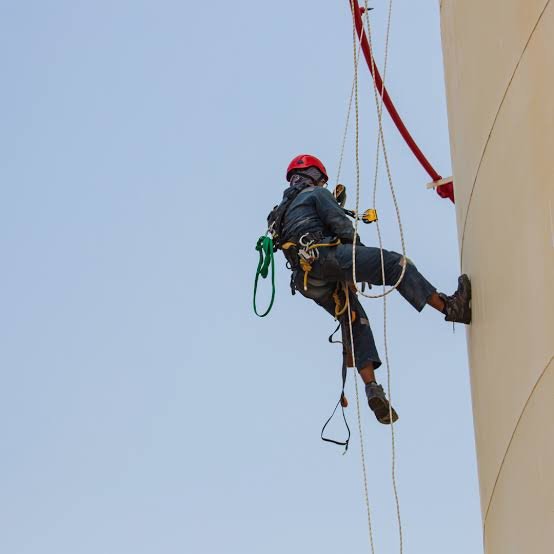
The split appears in the method. Rope access providers lean on technicians working at height on ropes, which suits inspection, NDT and light maintenance on structures where rigging scaffolding makes little sense.
For a closer look at the contract lifting package and the rope access side of what we do, see our contract lifts and crane hire service and our IRATA rope access services.
RACS vs Access and Lifting: Side-by-Side Comparison
The table below summarises how the two provider types typically differ across the criteria that matter most when you are choosing a contractor. Use it as a like-for-like framework: the point is not that one column wins, but that each criterion exposes a different cost, risk or suitability trade-off that a headline day rate hides.
| Criteria | RACS-type provider | Access and Lifting-type provider |
|---|---|---|
| Core method | Rope access, IRATA technicians | MEWPs, cranes, lifting equipment |
| Best for | Inspection, NDT, light maintenance | Heavy lifts, machinery moves |
| Setup time | Fast, minimal rigging | Longer, requires ground prep |
| Typical disruption | Low | Moderate to high |
| Compliance focus | IRATA, LOLER, BS 7121 | LOLER, BS 7121, PUWER |
| Cost driver | Technician hours | Plant hire plus operator time |
| Access eligibility | Needs safe anchor points and a clear drop zone | Needs suitable ground bearing, overhead clearance and a workable platform position |
| Site footprint | Minimal, no plant tracks across the site | Larger, crane pads, MEWP routes and exclusion zones |
| Weather sensitivity | Moderate, wind and rain affect rope work | High, wind limits crane and MEWP operations |
| Supervision model | Rope access supervisor plus IRATA Level 3 | Appointed Person, lift supervisor and operator |
| Insurance position | Usually professional indemnity plus public liability | Contract lift includes lifting insurance; crane hire leaves it with you |
| Aftercare | Incident investigation, NDT records, re-inspection scheduling | Lift plan review, LOLER thorough examination records, maintenance scheduling |
| Coverage model | Nationwide technician deployment | Plant mobilisation from a depot network |
How to read the comparison
Neither column wins outright. A rope access team is the better call when the work is high, awkward and short. A lifting provider is the better call when the load is heavy and the ground is workable. The mistake we see most often is a buyer choosing on headline day rate alone, then paying for it in delays when the method does not suit the site.
Three criteria deserve more weight than the rest:
- Eligibility. Rope access needs safe anchor points and a clear drop zone; if neither exists, the method is not viable regardless of price. Lifting needs ground bearing capacity, overhead clearance and a workable platform position. Ask both providers to confirm eligibility in writing before you compare quotes.
- Supervision. A RACS-type provider should name an IRATA Level 3 supervisor. An access and lifting provider should name an Appointed Person under BS 7121. If either cannot name the person, the quote is not comparable.
- Aftercare. Ask what happens after the job: incident investigation, re-inspection scheduling, LOLER thorough examination records and maintenance. Aftercare is where the cheaper quote often becomes the more expensive one.
Build your comparison on the same criteria for both providers. If one quote bundles planning, supervision, insurance and aftercare and the other is a bare day rate, you are not comparing like for like, you are comparing a package with a fragment.
For a closer look at the contract lifting package and the rope access side of what we do, see our contract lifts and crane hire service and our IRATA rope access services.
Contract Lift vs Crane Hire: What You Are Actually Buying
This distinction trips up more buyers than any other. Crane hire means you rent the machine and an operator, and you take on the planning, the lift plan, the risk assessment and the insurance responsibility. Contract lift means the contractor takes on the whole package: planning, supervision, Appointed Person, RAMS and insurance cover.
The difference matters because it shifts legal and financial risk. Under a contract lift, the lifting contractor assumes responsibility for the operation (Lifting operations). Under crane hire, that responsibility stays with you.
For a deeper breakdown of responsibilities, insurance and planning requirements, read our Lifting Operation Management service page.
How to Judge a Lifting Contractor Comparison Checklist
Use this checklist before you sign anything. It is the same set of questions we would want answered if we were hiring.
- Can they show current IRATA certification for every technician on the job?
- Is a qualified Appointed Person named in the proposal?
- Do they provide a written lift plan and RAMS before mobilisation?
A contractor who hesitates on any of these is telling you something. The checklist also gives you a like-for-like basis for comparing quotes, which is the only fair way to judge price.
The Lifting Plan and Risk Assessment Behind Every Safe Lift
Every safe lift starts with a documented plan. A lifting plan sets out the load, the rigging, the crane position, the ground conditions and the sequence of operations.
The Health and Safety Executive guidance on lifting operations sets out the requirement for planning and supervision under LOLER.
Watch out: a lift plan copied from another project is worse than no plan at all, because it creates false confidence.
Costs, Insurance and Aftercare: What Separates Quotes
Pricing for lifting and access work depends on the scope, the site conditions, the plant required and the duration, so no responsible contractor quotes a figure before a survey. What you can compare is structure. A quote that bundles planning, supervision, insurance and aftercare is not directly comparable to a bare day rate, and the cheaper headline number often carries the larger total cost once you add the gaps.
The cost drivers behind a quote
Most quotes are built from the same building blocks, even when the totals look very different:
- Labour. Technician or operator hours, plus supervision. Rope access quotes are driven by technician hours; lifting quotes are driven by operator and Appointed Person time.
- Plant. MEWP or crane hire, including mobilisation, demobilisation and standby time. Plant hire is usually charged separately from operator time, and standby is often chargeable.
- Planning and documentation. Lift plans, RAMS, method statements and surveys. Some contractors include these; others charge them as extras.
How to get comparable quotes
To compare like for like, ask every provider to quote against the same scope document and to break the price into the blocks above. A quote that separates labour, plant, planning, insurance and aftercare lets you see where the difference actually sits. A single lump sum does not.
A bare day rate is not a price. It is the first line of a price. Ask what is excluded, planning, supervision, insurance, standby, mobilisation and aftercare are the usual omissions.
Insurance: the line that changes the total
Insurance is where quotes diverge most. Contract lift includes cover as standard; crane hire typically leaves it with you. Ask what limit applies and what it covers. If your own policy does not cover lifting operations, the apparent saving on a crane hire quote can disappear the moment a claim arises. For the detail on cover levels, see our Safety Assurance service page.
Aftercare: the ongoing expense
Aftercare is the other differentiator. If an incident or near-miss occurs, can the contractor investigate and help you maintain compliance without a long wait for external consultants? Ongoing expenses to plan for include LOLER thorough examinations at the required intervals, re-inspection scheduling and maintenance of plant and equipment. A contractor who can fold these into the service is usually cheaper over the life of the work than one who hands them back to you.
The cheapest quote is the one with no gaps. Compare structure, not headline price: labour, plant, planning, insurance and aftercare should all be visible and accounted for.
Request a Free Quote for Your Next Lifting Operation
The RACS vs Access and Lifting comparison comes down to method fit, compliance evidence and total cost, not the day rate on the front of the quote. Get those three right and the decision becomes straightforward.
If you are weighing up providers, we would rather answer your questions directly than have you guess. SLRAS provides fully managed contract lifts with insurance cover, IRATA-certified rope access technicians at Levels 1 to 3, and lift plans and RAMS prepared by NEBOSH and CQI/IRCA qualified consultants.
Frequently Asked Questions
How do RACS and Access and Lifting compare for contract lifts?
Both providers offer lifting services, but a fair RACS vs Access and Lifting comparison rests on what each quote includes rather than the name on the van. Check whether the price covers the Appointed Person, the lift plan, RAMS, crane hire and insurance under a fully managed contract lift, or whether those sit with you. Ask for the LOLER and BS 7121 documentation each firm will supply, confirm IRATA certification for any rope access element, and compare like-for-like scopes before deciding.
What should I check before choosing a lifting contractor?
Work through a lifting contractor comparison checklist: valid LOLER thorough examination certificates for equipment, BS 7121-aligned lift planning, a named qualified Appointed Person, public and employer liability insurance levels, CHAS or SSIP accreditation, IRATA certification for rope access technicians, and a clear incident investigation process. Ask how quickly they respond to emergencies and request references from comparable sites. A contractor that hesitates on any of these points is a risk to your compliance record.
What is included in a fully managed contract lift?
A fully managed contract lift transfers responsibility for the planning and execution of the lift to the contractor. That typically covers the site survey, the lift plan and risk assessment, RAMS, crane selection and hire, a qualified Appointed Person, supervision on the day, and insurance cover for the operation. This differs from crane hire, where you supply the Appointed Person and planning. Confirm in writing exactly which duties sit with the contractor before work starts.
How do I check whether a lifting contractor meets LOLER and BS 7121 requirements?
Ask for current LOLER thorough examination certificates for all lifting equipment, evidence that lift plans follow BS 7121, and the qualifications of the Appointed Person assigned to your job. Request copies of RAMS and confirm the contractor holds suitable insurance. Check accreditation such as CHAS or SSIP, and verify IRATA certification if rope access is involved. Any credible lifting contractor should provide these documents without delay.
Choosing a lifting contractor is a risk decision as much as a purchasing one, and the wrong choice shows up months later in delays, incidents or compliance gaps. SLRAS combines over 20 years of hands-on experience with fully managed contract lifts, IRATA-certified rope access and independent HSE consultancy, all backed by 24/7 emergency response. Get started with SLRAS and request a free quote prepared by an experienced technician, with a response within one working day.
