Last Updated: October 23, 2026
Quick Summary
Hiring contract lift services in the UK transfers the planning, supervision and legal responsibility for a lifting operation to the lifting contractor, who supplies the crane, Appointed Person, lift plan, risk assessment and method statement, operators and insurance cover. Under LOLER, that duty sits with the contractor rather than you, unlike plain crane hire where those duties stay on your desk.
- Contract lift includes the Appointed Person, lift plan, RAMS, operators and insurance; crane hire only supplies the machine and operator.
- Ask to see the lift plan before the crane arrives, not on the morning of the lift.
- Send two or three providers the same information so quotes compare like for like.
- Contract lift costs more than crane hire only because it includes the Appointed Person, lift plan and RAMS.
- Check the insurance schedule for a lifting extension, not just the public liability limit.
Table of Contents
- What Hiring Contract Lift Services Actually Involves
- Contract Lift vs Crane Hire: Who Carries the Responsibility
- The Crane Lift Plan: What a Provider Should Produce Before the Day
- Contract Lift Risk Assessment and Method Statement: What to Check
- Step by Step: How to Hire a Contract Lift Service
- Contract Lift Service Cost: What Drives the Price
- Insurance, Liability and the Paperwork That Protects You
- Frequently Asked Questions
What Hiring Contract Lift Services Actually Involves
Hiring contract lift services in the UK means transferring the planning, supervision and legal responsibility for a lifting operation to the lifting contractor.
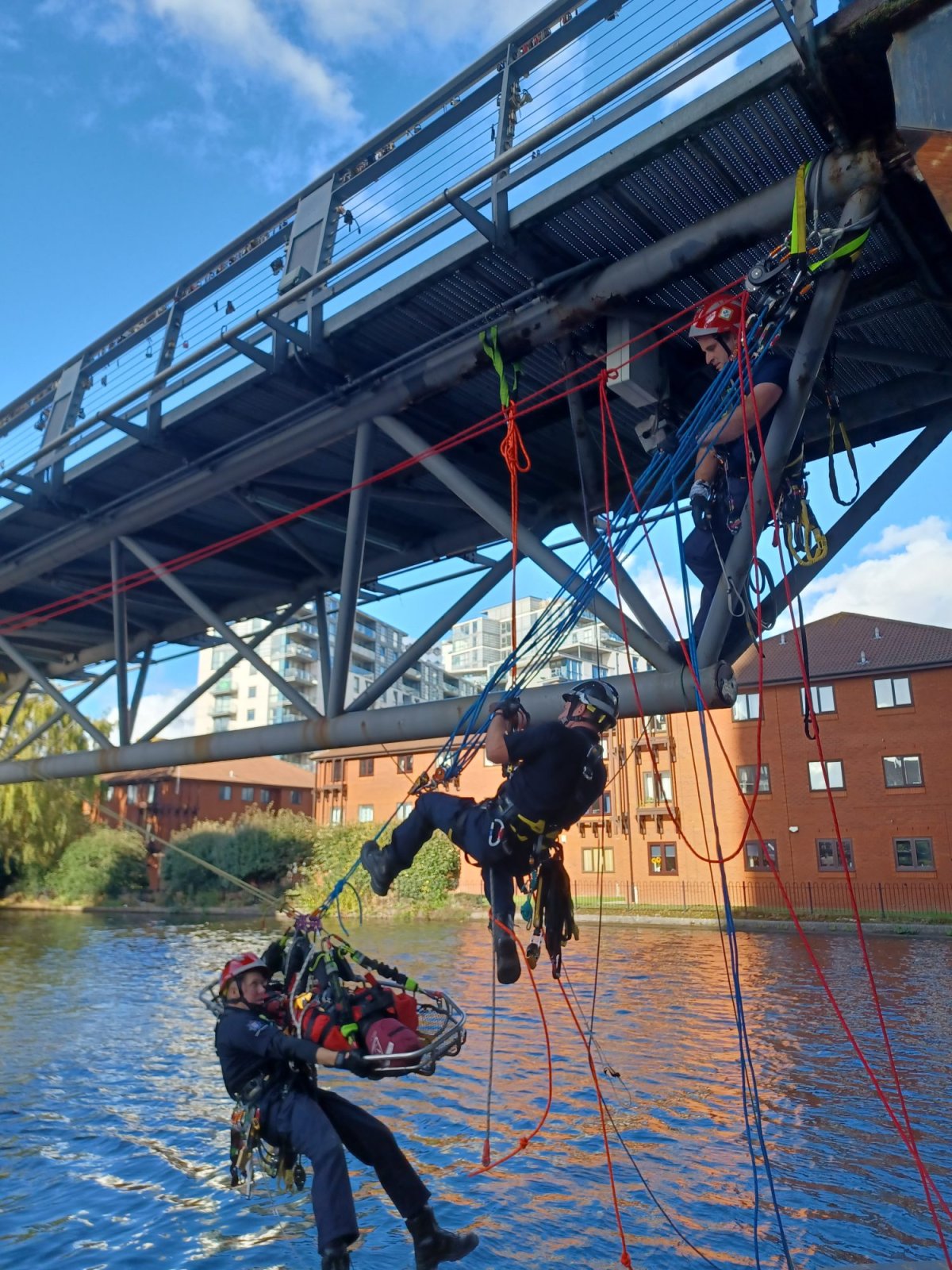
That single transfer is the whole point. Under the Lifting Operations and Lifting Equipment Regulations 1998 (LOLER), every lifting operation must be properly planned by a competent person, appropriately supervised and carried out safely. With contract lift, that duty sits with us, not with you.
The alternative, plain crane hire, leaves those duties on your desk. Most buyers do not realise the difference until they compare paperwork.
Contract lift transfers operational responsibility for the lift to the contractor. Crane hire only transfers the machine. The paperwork is where that difference becomes real.
Contract Lift vs Crane Hire: Who Carries the Responsibility
Contract lift and crane hire differ in one decisive way: who plans, supervises and insures the lifting operation. Under contract lift, the lifting contractor takes on that role.
In crane hire only, you hire the machine and its operator. Your own Appointed Person writes the lift plan, your team controls the lift, and your insurance covers it.
That distinction drives everything else: cost, lead time, and who answers questions after an incident.
When Crane Hire Only Is the Right Call
Crane hire only makes sense when you already hold the in-house capability. If you employ a competent Appointed Person, have a current lift plan and RAMS for the task, and your insurance explicitly covers lifting operations, paying a contractor to duplicate that work is wasted money.
It also suits repeat, well-understood lifts on a site where your team knows the ground conditions and access routes.
Where it falls short is the moment your Appointed Person is on leave, the lift is a one-off with an unusual load, or the site has constraints nobody has assessed. That is when contract lift earns its premium.
The Crane Lift Plan: What a Provider Should Produce Before the Day
A crane lift plan is the document that sets out how the lift will be carried out safely: the crane position, the load weight and dimensions, the lifting radius, the rigging arrangement, the ground conditions and the sequence of operations.
Ask to see it before the crane arrives, not on the morning. A plan produced on the day is a red flag.
What a proper lift plan should contain:
- Crane make, model and rated lifting capacity at the required radius
- Load weight, dimensions and centre of gravity
- Ground bearing pressure and any matting or spreader requirements
- Rigging and lifting accessories, with their SWL and inspection status
- Exclusion zones, signal arrangements and the slinger signaller’s position
- Contingency for changed conditions, such as wind
BS 7121, the British Standard for safe use of cranes, sets out the planning and supervision expectations that a credible provider works to.
A lift plan that arrives without a site assessment behind it is guesswork in a folder. If nobody has walked the ground and measured the radius, the capacity figures are meaningless.
Contract Lift Risk Assessment and Method Statement: What to Check
A contract lift risk assessment and method statement should name the hazards specific to your site, the control measures for each, and the sequence of work step by step. Generic, off-the-shelf documents are the most common failure we see.
Check three things. First, does the risk assessment mention your actual ground conditions, overhead lines, access route and neighbouring operations? Second, does the method statement describe your load, not a generic one? Third, are the named personnel on the document the ones turning up?
A document that could apply to any site in the country protects nobody. It also will not survive scrutiny after an incident.
Step by Step: How to Hire a Contract Lift Service
Hiring a contract lift service follows a predictable sequence. Skipping steps is how projects end up with the wrong crane, a late start or an uncovered liability.
- Define the lift. Record the load weight, dimensions, lift height, radius and any handling constraints.
- Survey the site. Walk the access route, ground conditions, overhead obstructions and exclusion zones.
- Request quotes. Send the same information to two or three providers so the quotes compare like for like.
- Compare scope, not just price. Check what is included: Appointed Person, RAMS, insurance, supervision, accessories.
- Verify competence and cover. Ask for accreditations, operator cards and insurance certificates before appointment.
- Review the lift plan. Read the plan and RAMS before the mobilisation date and raise queries early.
- Confirm the day. Agree arrival times, site induction, permit requirements and the named supervisor.
- Debrief afterwards. Record what happened, any near misses, and file the documentation.
Information to Have Ready for a Quote Request
A quote request that arrives with complete information gets a faster, more accurate response. Vague enquiries get padded prices to cover uncertainty.
Have these ready:
- Load weight, dimensions and a photo or drawing
- Lift height and required radius
- Site address and access constraints, including gate widths and ground surface
- Proposed date and duration
- Any permit-to-work or induction requirements
- Whether you hold your own Appointed Person and lift plan
Send that in one message and you will get a usable number back rather than a caveat-laden estimate.
Contract Lift Service Cost: What Drives the Price
Contract lift service cost depends on the crane, the lift complexity, the site and the duration, not on a fixed rate card. Providers quote per job because two lifts of the same weight can need very different machines and planning.
The main cost drivers:
- Crane size and type. Capacity at the required radius decides the machine, and larger machines cost more to mobilise.
- Lift complexity. Tandem lifts, unusual loads and tight radii need more planning and more supervision.
- Site conditions. Poor ground, restricted access and overhead constraints add matting, permits and time.
- Duration. A half-day lift and a week-long programme price very differently.
- Documentation and supervision. Contract lift includes the Appointed Person, lift plan and RAMS, which is why it costs more than crane hire only.
We do not publish a rate card, because a number quoted without seeing your site would be fiction. Ask for a quote with the scope itemised so you can see what you are paying for.
| Cost factor | What pushes the price up | What you can control |
|---|---|---|
| Crane size | Larger capacity needed at radius | Confirm true load weight early |
| Lift complexity | Tandem lifts, awkward loads | Break the lift into simpler stages if possible |
| Site access | Poor ground, tight gates, overhead lines | Improve access before mobilisation |
| Duration | Multi-day programmes | Consolidate lifts into fewer visits |
| Scope | Full contract lift versus hire only | Decide who holds the Appointed Person role |
Insurance, Liability and the Paperwork That Protects You
Insurance and liability are where contract lift and crane hire separate most sharply, and where buyers most often discover a gap after an incident rather than before.
The mechanism matters. A standard public liability policy may exclude or restrict liability arising from the use of lifting equipment, or may apply only to your own negligence.
Questions worth putting in writing before you appoint anyone:
- Does the policy explicitly cover lifting operations, or is lifting excluded or restricted?
- What is the limit of indemnity, and is it per claim or in aggregate?
- Does the cover extend to the contract lift duties the provider is taking on, including the Appointed Person role and supervision?
- Is there cover for damage to the load, to third-party property and to the crane itself, and are those separate policies?
- What exclusions apply to ground conditions, underground services or overhead line contact?
- Who is the named insured, and does the cover extend to subcontractors if any part of the lift is subcontracted?
The paperwork that protects you, and what each document actually does:
- A signed contract setting out the scope and who holds which duty. This is the document that decides whether you are buying contract lift or crane hire only. It should name the Appointed Person and state which party is responsible for the lift plan, the RAMS, supervision and insurance.
- The lift plan and RAMS, dated and signed by the Appointed Person. These show that the operation was planned by a competent person, which is the duty LOLER places on the duty holder. A plan signed by someone who never attends is a liability gap, not a formality.
- Insurance certificates with adequate limits and the right extensions. Check the schedule against the questions above, and keep a copy with the contract.
- Operator and slinger signaller competence cards. These evidence that the people carrying out the lift are trained for the role. Check that the cards are current and that the names match the personnel on site.
- Thorough examination certificates for the crane and lifting accessories. Lifting equipment must be thoroughly examined at the intervals set out in LOLER, and the certificates should be available before mobilisation.
- A post-lift record of the operation. A short record of what was lifted, by whom, when, and any deviations from the plan is the document that demonstrates the operation was supervised to the standard the law requires.
Keep all of it. If something goes wrong, the paper trail is what shows that the operation was planned, supervised and insured as a contract lift rather than left to chance.
A certificate that shows a public liability limit without showing the lifting extension is not evidence that the lifting operation is covered. Ask for the schedule and the exclusions, and keep them with the contract.
Frequently Asked Questions
What is the difference between contract lift and crane hire?
With crane hire only, you take on the planning and operational responsibility: your Appointed Person produces the crane lift plan, risk assessment and method statement, and your team supervises the lift. A contract lift moves that duty to the provider, who supplies the Appointed Person, lift plan, RAMS, operator, slinger signaller and insurance cover for the lifting operation. In short, crane hire gives you the machine and operator; a contract lift gives you the whole managed operation.
What information do I need to get a contract lift service quote?
Have the load weight and dimensions, the lifting radius, the lift height, site access and ground conditions, and the date window ready before you enquire. Providers also need to know whether the load is static or needs turning, any obstructions or overhead lines, and whether the site is live or shut down. Send photographs and a site plan where possible. Accurate load weight and radius figures are the two details that most affect both the crane selected and the contract lift service cost.
Does a contract lift include insurance?
A properly managed contract lift should include insurance cover for the lifting operation, and you should ask for the certificate and confirm exactly what it covers before work starts. Check the policy covers the load being lifted, not just the crane, and confirm the liability position in writing. Where you hire a crane only, your own insurance usually carries the load risk, which is one reason the contract lift vs crane hire decision matters commercially as well as operationally.
Which regulations and standards apply to a contract lift?
Lifting operations fall under the Lifting Operations and Lifting Equipment Regulations 1998 (LOLER), which require lifting to be planned by a competent person, appropriately supervised and carried out safely. The Provision and Use of Work Equipment Regulations 1998 (PUWER) also apply, and BS 7121 gives the recognised code of practice for safe crane use. Ask any provider how their crane lift plan, risk assessment and method statement meet these requirements before you appoint them.
