Last Updated: October 26, 2026
Quick Summary
Industrial machinery relocation services cover the planned removal, transport and reinstallation of production equipment by a specialist contractor, from pre-move survey through dismantling, lifting, haulage, installation and commissioning. Full machinery relocation also includes alignment, testing and sign-off, and the move is only finished when the machine runs to specification.
- A machinery move runs through two phases: survey and planning first, then dismantling, transport and reinstallation.
- The pre-move checklist items that slip are almost always utilities and foundations, both on the critical path.
- A lifting plan must be prepared by a competent Appointed Person and confirm actual load weight and lifting points.
- Recommissioning runs from foundation checks and levelling through alignment, no-load and on-load testing to written sign-off.
- Ask for quotes broken down by phase so you can compare suppliers and spot excluded work.
Table of Contents
- What Industrial Machinery Relocation Services Actually Cover
- The Step-by-Step Machinery Relocation Process
- Your Machine Moving Checklist: Pre-Move Readiness
- Building a Machinery Relocation Risk Assessment
- Why Every Move Needs a Machinery Lifting Plan
- Machinery Installation and Recommissioning After the Move
- Cost Drivers, Permits and Transport Constraints
- Request a Free Quote for Your Machinery Relocation
- Frequently Asked Questions
What Industrial Machinery Relocation Services Actually Cover
Industrial machinery relocation services are the planned removal, transport and reinstallation of production equipment by a specialist contractor.
A buyer assumes “relocation” means a haulage firm with a flatbed. It does not. A lathe, a press or a packaging line is not freight.
The full scope normally includes:
- Site survey and access assessment
- Dismantling and isolation of services
- Lifting plans and risk assessments
Most enquiries we take are not really about transport. They are about production continuity, downtime and the risk of a damaged machine sitting idle for weeks.
The Step-by-Step Machinery Relocation Process
A machinery move runs through two phases: survey and planning first, then dismantling, transport and reinstallation. Skipping the first phase is the most expensive shortcut in the industry.
Phase 1: Site Survey and Access Assessment
The survey answers one question: can the machine physically leave the building and reach the new site intact? A surveyor records door widths, floor loadings, ceiling heights, turning circles and the condition of the route from machine to loading bay.
Access assessment is where many moves quietly fail. A machine that fits through the door on paper can still be blocked by a step, a low beam or a service pipe nobody mapped.
Phase 2: Dismantling, Transport and Reinstallation
Dismantling follows the manufacturer’s instructions, with every cable, pipe and fixing labelled for the rebuild. Load securing on the transport leg is not a formality: a machine that shifts in transit can arrive with cracked castings or bent shafts.
Reinstallation reverses the process, then adds the part most contractors rush: alignment, testing and commissioning. We treat the move as finished only when the machine runs to specification, not when it lands on the new floor.
Your Machine Moving Checklist: Pre-Move Readiness
A machine moving checklist is the document that tells you whether you are ready to book a date. Use this one before you commit to a schedule:
- Site survey completed for both locations
- Manufacturer’s dismantling and reinstallation instructions on file
- Utilities isolation plan agreed with the site team
- Lifting plan and risk assessment signed off
The checklist looks simple on paper. In practice, the items that slip are almost always utilities and foundations, and both sit on the critical path.
Building a Machinery Relocation Risk Assessment
A machinery relocation risk assessment identifies what can go wrong at each stage and what controls prevent it. It is not a box-ticking exercise completed the week before the move.
We build ours around four failure categories: people, plant, route and environment. Each control gets an owner and a verification date.
| Risk | Likely Cause | Control |
|---|---|---|
| Machine damage in transit | Poor load securing | Documented securing method and inspection |
| Lost production time | Utilities not isolated on schedule | Isolation plan agreed with site team |
| Injury during lifting | Unplanned lift | Appointed Person and written lift plan |
| Delayed reinstallation | Unlabelled parts | Labelling regime at dismantling |
Where the client wants an independent view, our HSE consultancy team audits the plan and the management system behind it.
Why Every Move Needs a Machinery Lifting Plan
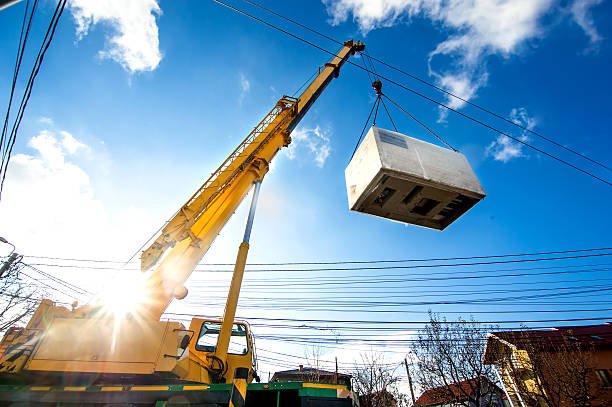
A machinery lifting plan is a written method for every lift in the move, prepared by a competent Appointed Person. It sets out the load weight, centre of gravity, lifting points, equipment and exclusion zones.
Heavy machinery rarely has convenient lifting points. Under LOLER, lifting operations must be planned by a competent person, and the HSE’s guidance on lifting operations sets out what that planning should include.
This is the stage where an experienced lifting contractor pays for itself. Our contract lift service covers planning, RAMS, Appointed Persons and insurance as one package, so responsibility does not fall between two suppliers on the morning of the move. Where a move calls for it, we also provide Lifting Operation Management and Crane hire as part of the same coordinated programme.
Machinery Installation and Recommissioning After the Move
Machinery installation is the phase that decides whether the relocation succeeded. The machine must be levelled, aligned, reconnected and tested before production resumes, and the sequence matters as much as the tasks.
A typical recommissioning sequence runs:
- Foundation and mounting checks, confirm the new foundation or floor slab meets the manufacturer’s specification for flatness, level and load capacity, and that holding-down bolts or anchor points are in the right place before the machine is set down.
- Setting and levelling, position the machine and level it to the manufacturer’s tolerances using shims, grout or adjustable mounts. This is where a machine that arrived intact can still be installed badly: a press that is out of level will wear unevenly and may fail its first quality check.
- Alignment, align the machine to its driven equipment, conveyors, feed systems or tooling. Alignment to the manufacturer’s tolerances is a measured task, not an eyeballed one, and it should be recorded.
- Reconnection of services, reconnect power, air, water, hydraulics, extraction and control networks. Every cable, pipe and fixing labelled at dismantling should match its counterpart at the new site; a mismatch here is the most common cause of a delayed restart.
- No-load testing, run the machine through its motions without product to confirm controls, interlocks, guards and emergency stops function correctly.
- On-load testing, run production material and check output against the original specification: speed, tolerance, quality and cycle time.
- Sign-off and acceptance, record the results against the original specification and agree in writing that the machine is accepted. This is the document that closes the project and supports any warranty or insurance position.
Teams often book production restart before commissioning is complete, then lose the gained time to a fault found on first run. Build a buffer into the schedule instead, and keep the commissioning technician on site until the first production shift has run cleanly.
Two practical points are easy to miss. First, utilities isolation and reconnection should be planned together: the isolation plan agreed at survey stage tells the reconnection team what to expect, and a named contact for each service, electrical, mechanical, controls, prevents the handover gap where nobody owns the last connection. Second, keep the manufacturer’s installation instructions and any alignment records with the machine’s maintenance file. If a warranty claim is ever needed, that file is the evidence that the move was done to specification.
We treat the move as finished only when the machine runs to specification, not when it lands on the new floor. Our contract lift service and H&S consultancy team can sit alongside the installation phase so that lifting, installation and sign-off are one coordinated programme rather than three suppliers handing over to each other.
Cost Drivers, Permits and Transport Constraints
Relocation cost is not a single rate. It is the sum of several drivers, and understanding them lets you budget before you request a survey. The main drivers are:
- Weight and dimensions, the heavier and larger the machine, the larger the crane, the heavier the transport vehicle and the more lifting equipment is needed. A 12-tonne press and a 40-tonne press are different projects, not different quotes on the same project.
- Access difficulty, a machine that leaves through a full-height loading bay is cheaper to move than one that must be dismantled to pass through a 2.4 m doorway, craned over a roof or removed through a wall opening that has to be made good afterwards.
- Distance and route, haulage is priced by vehicle, distance and time. A route with weight-restricted bridges, low trees or narrow junctions may need a longer diversion or a smaller vehicle making more trips.
- Dismantling and reinstallation complexity, a standalone lathe with a plug and a bolt-down footprint is quick. A packaging line with conveyors, guards, control panels and interlocking is a multi-day dismantle and rebuild.
A practical way to budget is to ask for the quote broken down by phase: survey, dismantling, lifting, transport, reinstallation and commissioning. That breakdown lets you compare suppliers on the same basis and see where a cheap headline price is quietly excluding work.
Permits and transport constraints
Abnormal loads are the part of a move most buyers have never dealt with.
A route survey records bridge weight limits, overhead clearance, junction turning radii, road widths and any roadworks or weight restrictions on the day.
Lifting operations are covered separately by the Lifting Operations and Lifting Equipment Regulations 1998 (LOLER), which require lifting operations to be planned by a competent person, appropriately supervised and carried out safely. The HSE guidance on lifting operations sets out what that planning should include.
We handle route surveys, abnormal-load notifications and lift planning as part of the package, and our service area coverage confirms whether a site falls inside our mobilisation range.
Request a Free Quote for Your Machinery Relocation
Every relocation starts with a conversation and a survey. Tell us the machine, the two sites and your downtime window, and we will tell you what the move involves.
Our team brings over 20 years of hands-on experience, IRATA-certified rope access technicians and NEBOSH-qualified consultants to every project. We work to LOLER and BS 7121, and we cover sites nationwide from our North East base.
Contact us to request a free quote.
Frequently Asked Questions
Does machinery relocation require a risk assessment and method statement?
Yes. A machinery relocation risk assessment and method statement should be produced before any work starts, and it forms part of your duties under the Provision and Use of Work Equipment Regulations 1998 and the Lifting Operations and Lifting Equipment Regulations 1998 (LOLER). The assessment identifies hazards such as suspended loads, confined access routes and live services, while the method statement sets out the sequence of work, the lifting plan and who controls each stage. Keep both documents on site and brief everyone involved before the move begins.
What should a machine moving checklist include before the move day?
A practical machine moving checklist covers the site survey and access route, isolation and lock-off of power, gas and water, disconnection by a competent electrician, drainage of oils and coolants, removal of tooling and loose parts, labelling of cables and pipework, floor protection along the route, and confirmation that the lifting plan and RAMS are signed off. Add a named contact for each department and a schedule for when each machine goes offline so production continuity is protected.
How do you minimise production downtime during a factory move?
Sequence the move so only the machines being relocated are offline at any one time, and move critical production equipment first or last depending on demand. Pre-position crane hire and transport so lifting equipment is ready when the machine is, and have the machinery installation team on site before the machine arrives at its new location. Agreeing a phased schedule with your relocation provider, and confirming utilities reconnection dates in advance, keeps operational disruption to the shortest window possible.
What is included in a machinery lifting plan?
A machinery lifting plan sets out the load weight and centre of gravity, the lifting points and slinging method, the crane or hoist capacity and configuration, ground bearing conditions, the exclusion zone, and the named Appointed Person and slinger signaller. Under BS 7121 and LOLER it must be prepared by a competent person and be specific to the lift rather than generic. For complex or tandem lifts, the plan should also cover contingency arrangements and the sequence for each stage of the operation.
Moving heavy plant is a project with a critical path, not a haulage job with a crane attached. If you want the planning, lifting and safety work handled by one accountable team, get started with SLRAS and move your machinery with a documented plan behind every lift.
